

The Use of Artificial Intelligence in the Administration of Justice. Suggested Framework of Ethical Principles and Reasoning of Judges in the Use of intelligent Systems
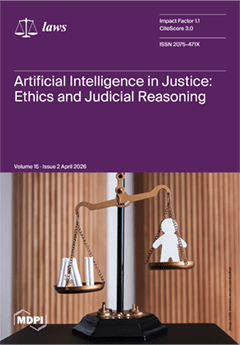
Authors: Nikolaos Manos, Emmanouil Technitis, Athanassia Sykiotou
Abstract: Artificial intelligence is already being used in the administration of Justice, with various applications assisting judges in resolving cases. In particular, in criminal Justice, these applications include predictive Justice and decision-making assistance through the assessment of facts, as well as the classification of criminals into risk groups. This article examines the current regulatory and ethical framework (AI Act, Council of Europe Convention on AI, CEPEJ Ethical Charter, UNESCO, and OECD principles) and develops a regulatory approach to the use of AI systems by judges and prosecutors. The methodology is based on a doctrinal analysis of international, EU, and professional ethical literature, as well as on a synthesis of principles of judicial conduct (Bangalore Principles, Magna Carta of Judges). To strike a balance between the rules of governing system use and judicial ethics, the article proposes a consistent framework of ethical principles (legitimacy, transparency, accountability, integrity, human oversight, prohibition of discrimination) and introduces a practical “line of reasoning” with key questions that judges should consider before and during the use of intelligent tools (risks, bias, proportionality, understanding of the algorithm, and impact on judicial judgment). The article concludes that AI may improve the efficiency of the justice system only when included inside a strong ethical framework and specialized training, guaranteeing that final judicial decisions remain solely human and fully aligned with the rule of law.
Keywords: Artificial Intelligence (AI), Judicial Ethics, Human Rights, Human Oversight, Impartiality, Algorithmic Bias, Transparency, Judges
The full version of the article is available at https://www.mdpi.com/2075-471X/15/2/20.